[Energy] Physical Grids Do Not Trust Black-Box Guesses: Attested Offline Releases, Local Edge Diagnostics, and Power-Purchasing Tariff Scenario Rehearsal
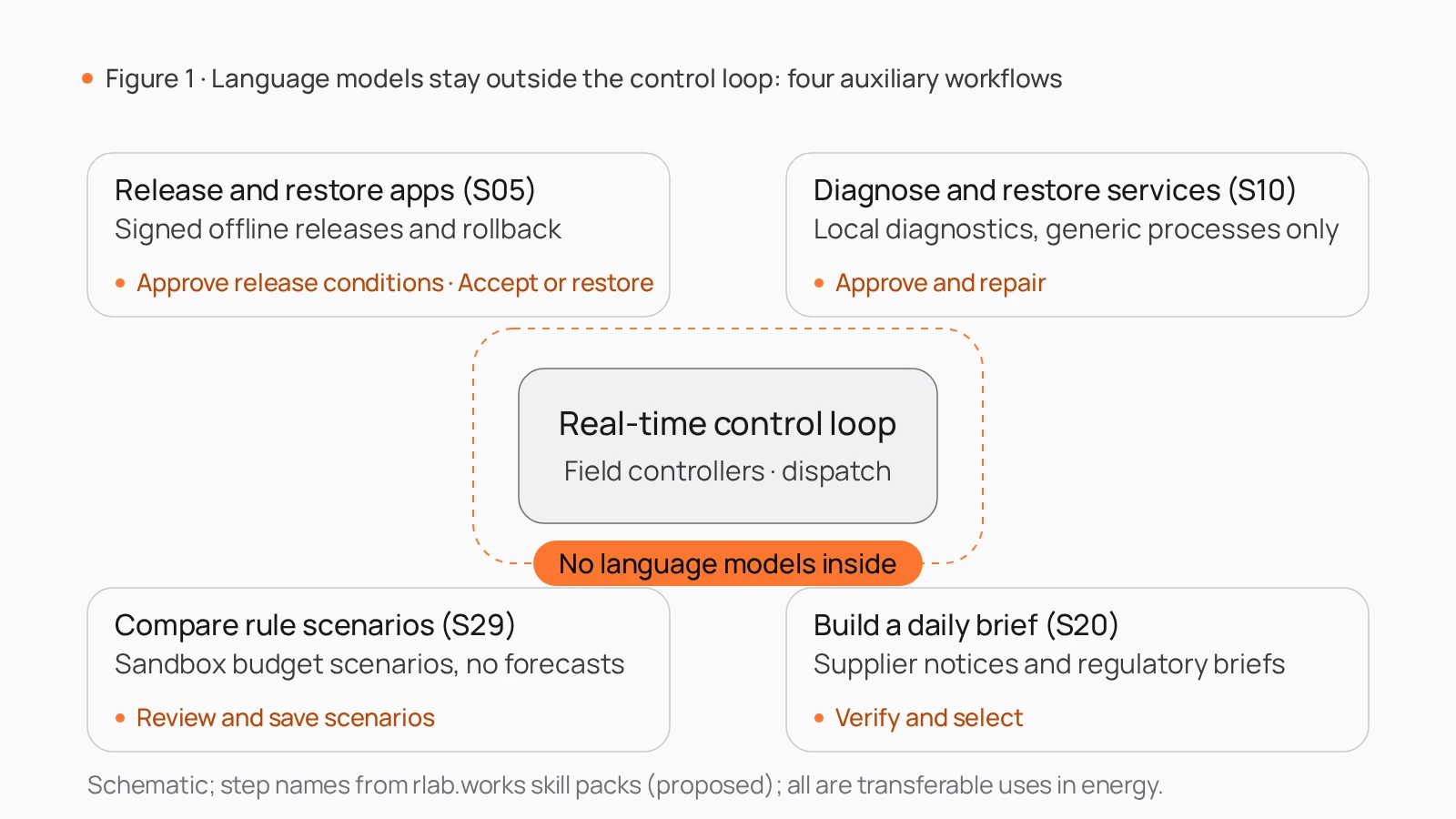
Large language models do not belong inside real-time grid control loops; what can be deployed at energy sites are signed offline package releases, snapshot rollbacks, local service diagnostics, and sandboxed power-tariff scenario rehearsals—all of which are transferable workflows in the energy sector.

Why Power Stations Keep Probabilistic Models Out of Real-Time Control Loops
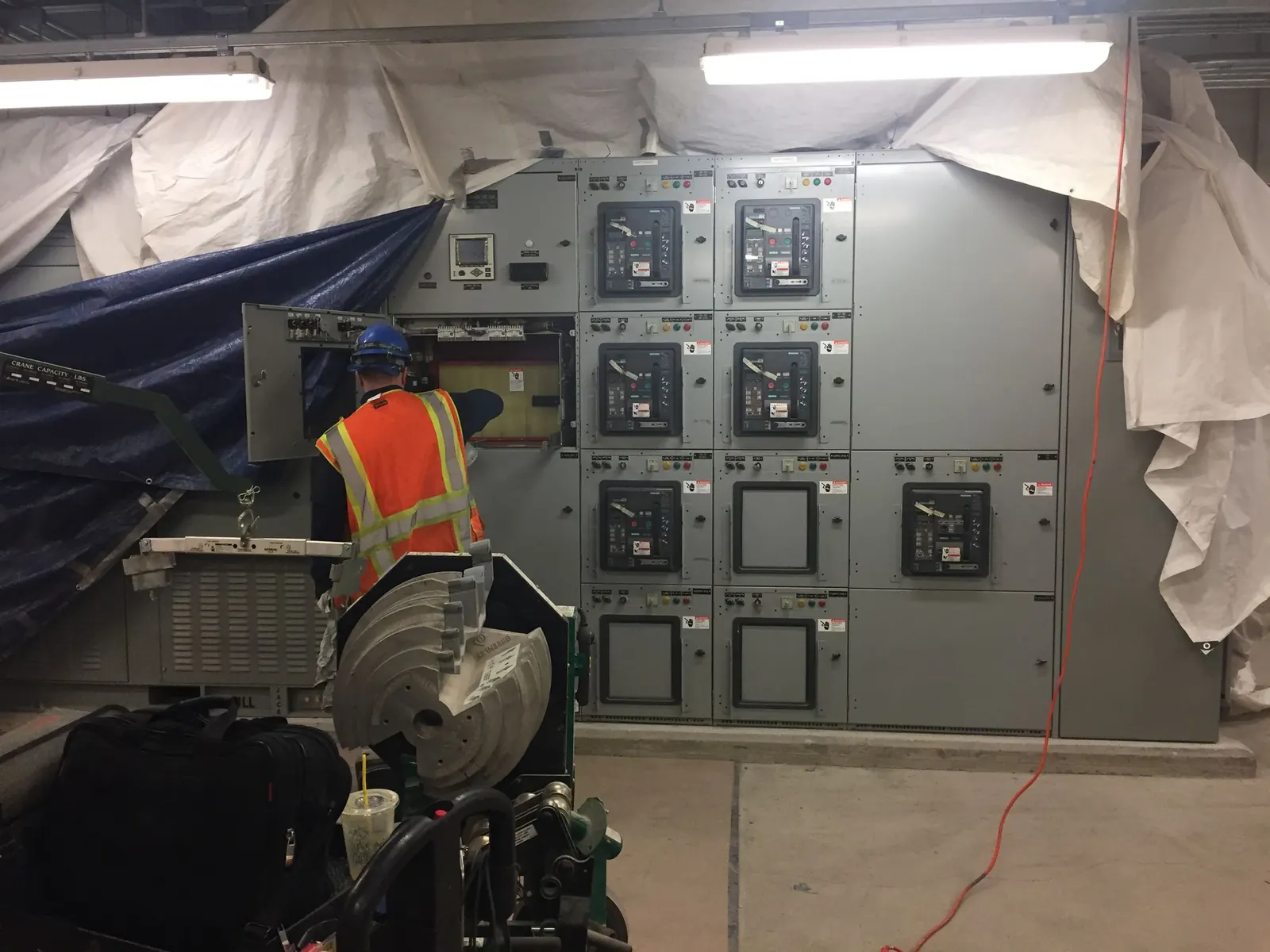
Consider a hypothetical scenario at a regional power station. Operations engineers need to update auxiliary monitoring software across air-gapped workstations while resolving a local port conflict stalling an edge data-collection service. Meanwhile, procurement analysts are comparing electricity budgets under shifting tariff rules and load assumptions. If someone proposes wiring a generative large language model into the station’s real-time control loop—or letting an autonomous agent pull external packages and restart edge processes at will—safety engineers will immediately veto it. Near physical power infrastructure, an unverified software change or probabilistic black-box guess touching a field controller can trigger cascading hazards.
Physical grid discipline sets a clear boundary: large language models stay out of real-time control loops. Where structured workflows can assist energy sites is in signed offline package releases, verified snapshot rollbacks, local service diagnostics on edge hosts, and sandboxed tariff rehearsals—and in the capability catalog, all of these skill packs for energy are transferable uses requiring domain adaptation.
Grid Reliability Pressures, Cross-Disciplinary Collaboration, and System Safety Engineering
Why does the energy sector simultaneously need software tooling and enforce strict limits on software autonomy? The answer lies in electricity supply-and-demand shifts, the collaborative boundary of machine learning, and systems-theoretic safety engineering.
In its annual analysis and forecast of global electricity demand, supply, and emissions, the International Energy Agency (IEA, 2024) highlights growing electricity demand—including from data centres—alongside a rising share of renewables and nuclear, underscoring the need for grid flexibility and reliability[3]. Examining how machine learning (ML) can help reduce greenhouse gas emissions and help society adapt to a changing climate, Rolnick et al. (2022) identify high-impact problems from smart grids to disaster management where existing gaps can be filled by ML, encompassing research questions and business opportunities[1]. Crucially, ML fills these gaps in collaboration with other fields[1]; in our reading, this means that in power systems software operates within boundaries set by electrical and safety engineering.
Why must those boundaries be enforced as system-level constraints rather than ad-hoc checks? Nancy Leveson (2011) notes that although engineering has experienced a technological transformation, basic safety and reliability engineering techniques—created in a simpler, analog world—have changed very little and struggle in a complex, sociotechnical, software-intensive world[2]. Revisiting ideas pioneered by 1950s aerospace engineers in their System Safety concept, Leveson proposes an approach based on modern systems thinking and systems theory[2]. Arguing that traditional causality models are inadequate, she presents an extended causation model—Systems-Theoretic Accident Model and Processes (STAMP)—for accident analysis, hazard analysis, system design, operational safety, and managing safety-critical systems[2]. Applying these techniques to real-world events—including the friendly-fire loss of a U.S. military helicopter in the first Gulf War, a drug recall, the U.S. Navy SUBSAFE program, and bacterial contamination of a Canadian town’s water supply—Leveson argues that traditional causality models are inadequate for complex sociotechnical systems and tests her new safety techniques on these cases[2].
Connecting these findings yields a clear principle for energy teams. As growing electricity demand and generation shifts heighten the need for grid flexibility and reliability[3], software automation must never weaken the safety constraints of a software-intensive sociotechnical system[2]. Probabilistic models have no place issuing real-time actuator commands or mutating live edge configurations without oversight. Engineering value comes from wrapping auxiliary software delivery, local diagnostics, tariff scenario comparisons, and regulatory briefings inside verifiable contracts and human review gates.
Mapping System Safety to Auxiliary Energy Workflows: Offline Releases, Edge Diagnostics, and Scenario Rehearsal
In the capability catalog, these safety constraints become explicit input schemas, blocking human review gates, and verifiable recovery records. First, an explicit boundary: the energy industry has no skill packs tagged as source-supported industry applications; every pack discussed here is a transferable use requiring domain adaptation, and all packs are proposed compositions demonstrated with synthetic data and not yet connected to live services.
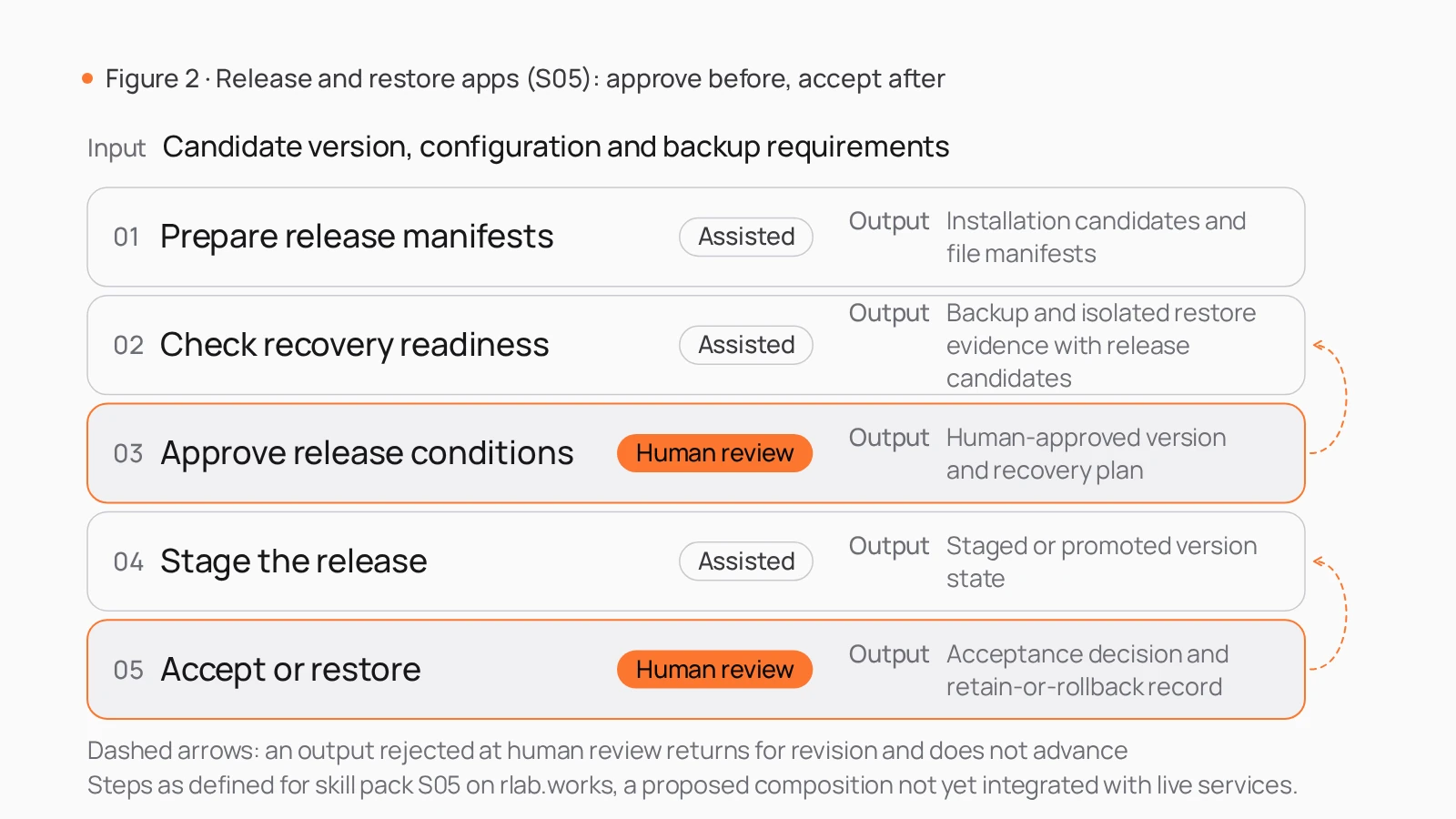
For maintaining auxiliary station software in isolated networks, Release and restore apps (S05) in the Agent OS module takes Candidate version, configuration and backup requirements as input. Assisted steps Prepare release manifests (packages and file manifests) and Check recovery readiness (backup and isolated restore evidence). Execution pauses at a human review gate—Approve release conditions—where an assigned reviewer inspects the evidence; rejected output returns for revision and does not advance. Only after approval does it Stage the release, followed by a final human gate, Accept or restore, recording the acceptance decision and retention or rollback log. Underneath, Attested release and offline image verification verifies source files, versions, platform manifests, and release attestations, safely unpacks installers, and checks bindings between offline container images, configurations, and layers without trusting mutable tags. The Verified file-level recovery snapshot component copies selected data, configurations, and scheduled-task state, recording pre- and post-copy signatures and hashes while preserving symbolic links and generating an integrity manifest. In energy, this transferable pack bundles installation, signature, and recovery evidence for auxiliary software updates; it covers auxiliary software delivery only, never controls plant equipment, and requires adaptation to offline environments, trusted signatures, and site change workflows.
For commercial planning and engineering intelligence, the Intelligence module offers transferable patterns:
- Compare rule scenarios (S29): From Rule ideas, historical records and comparison objectives, assisted steps Specify rules and assumptions, Replay historical scenarios, and Compare parameters and costs to produce out-of-sample comparisons and cost scenario tables, ending at a human gate (Review and save scenarios) where an analyst confirms the assumption tables and comparison notes. A transferable use in finance and energy, it adapts historical replay to power-purchasing budgets under explicit energy price and demand assumptions. Adapting it to energy requires replacing financial asset, return, and portfolio-weight models with energy-use constraints; it compares budget scenarios only and never forecasts prices or executes dispatch.
- Build a daily brief (S20): From Information sources, topics and recipient settings, it collects readable material, structures facts and entities, links topics and events, and pauses at a human gate (Verify and select) before delivering a versioned brief. While its members carry a source-supported industry association in media (meaning only that source data has an explicit media association, with no claim of customers, deployments, or outcomes), its energy use is transferable—compiling vendor notices, regulations, and technical articles into a cited daily brief. Adapting it requires replacing the entity vocabulary and sources, and summaries never constitute repair instructions or regulatory rulings.
The components referenced above—Attested release and offline image verification, Verified file-level recovery snapshot, and Local service health and diagnostics export—carry a working code rating based solely on static source inspection rather than production deployment, with no claims of customer deployments, efficiency gains, or return on investment.
Pre-Pilot Checks for Energy Engineering and Operations Leaders
Before funding a workflow pilot at a power station or procurement desk, leaders can apply concrete checks:
- Verify isolation from real-time control: Confirm that workflows touch only auxiliary software packages, general-purpose host processes, and offline budget workbooks, with no permissions or network paths to field controllers.
- Require attestation, snapshot hashes, and blocking human gates: Check that offline updates and edge repairs verify immutable image-layer bindings and file-level recovery snapshots, blocking execution until an assigned reviewer approves the change within a maintenance window.
- Audit the domain-model rewrite before transferring workflows: Verify that engineers have replaced portfolio-weight logic with energy-use constraints and tariff rules, replaced generic dictionaries with power-equipment terms, and kept all outputs strictly advisory.
Found it useful? Pass it on.
References
- [1]
Rolnick, D., Donti, P. L., Kaack, L. H., Kochanski, K., Lacoste, A., Sankaran, K., Ross, A. S., Milojevic-Dupont, N., Jaques, N., Waldman-Brown, A., Luccioni, A. S., Maharaj, T., Sherwin, E. D., Mukkavilli, S. K., Kording, K. P., Gomes, C. P., Ng, A. Y., Hassabis, D., Platt, J. C., ... Bengio, Y. (2022). Tackling Climate Change with Machine Learning. ACM Computing Surveys, 55(2), Article 42. doi.org/10.1145/3485128
- [2]
Leveson, N. G. (2011). Engineering a Safer World: Systems Thinking Applied to Safety. MIT Press. doi.org/10.7551/mitpress/8179.001.0001
- [3]
International Energy Agency (IEA). (2024). Electricity 2024: Analysis and forecast to 2026. IEA Publications. iea.org ↗
Related capabilities
Platform modules
Skills packs
S05 · Agent OS
Release and restore apps
A new release breaks in production, and only then does it turn out there is no working backup.
Prepare release files, check recovery readiness, then decide on release and acceptance.
- Prepare release manifests
- Check recovery readiness
- Approve release conditionsHuman review
- Stage the release
- Accept or restoreHuman review
5 steps2 human reviews11 components
S10 · Agent OS
Diagnose and restore services
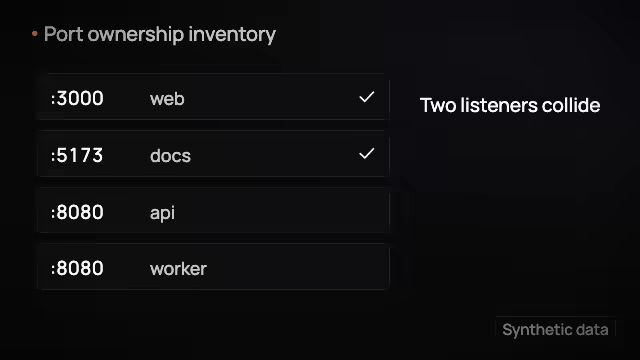
A local service will not start, ports are taken and processes clash, and every cause has to be checked by hand.
Locate process failures and conflicts, approve a repair and check the restarted service.
- Inspect runtime state
- Explain the exceptions
- Approve and repairHuman review
- Check restoration
4 steps1 human reviews6 components
S29 · Intelligence
Compare rule scenarios
A new pricing or investment rule is too risky to launch untested, and intuition will not convince anyone.
Express ideas as explicit rules, compare historical replays and parameters and review assumptions.
- Specify rules and assumptions
- Replay historical scenarios
- Compare parameters and costs
- Review and save scenariosHuman review
4 steps1 human reviews6 components
S20 · Intelligence
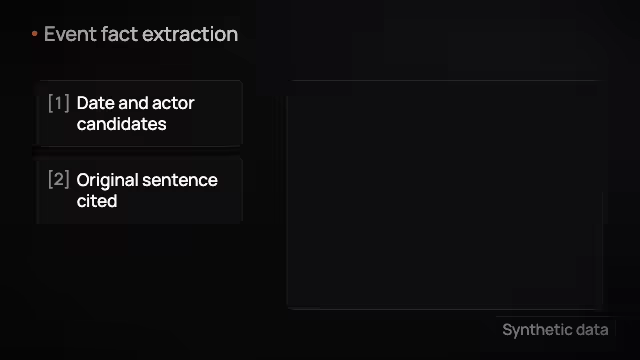
Build a daily brief
Dozens of sources a day, mostly repeats, and the source gets lost when someone retells it.
Turn multiple sources into cited facts and review them before preparing a subscribable brief.
- Collect readable material
- Structure facts and entities
- Link topics and events
- Verify and selectHuman review
- Prepare and deliver the brief
5 steps1 human reviews9 components