Algorithm Aversion and Automation Bias: Why the Human Gate Is Core Architecture Rather Than a Transitional Compromise
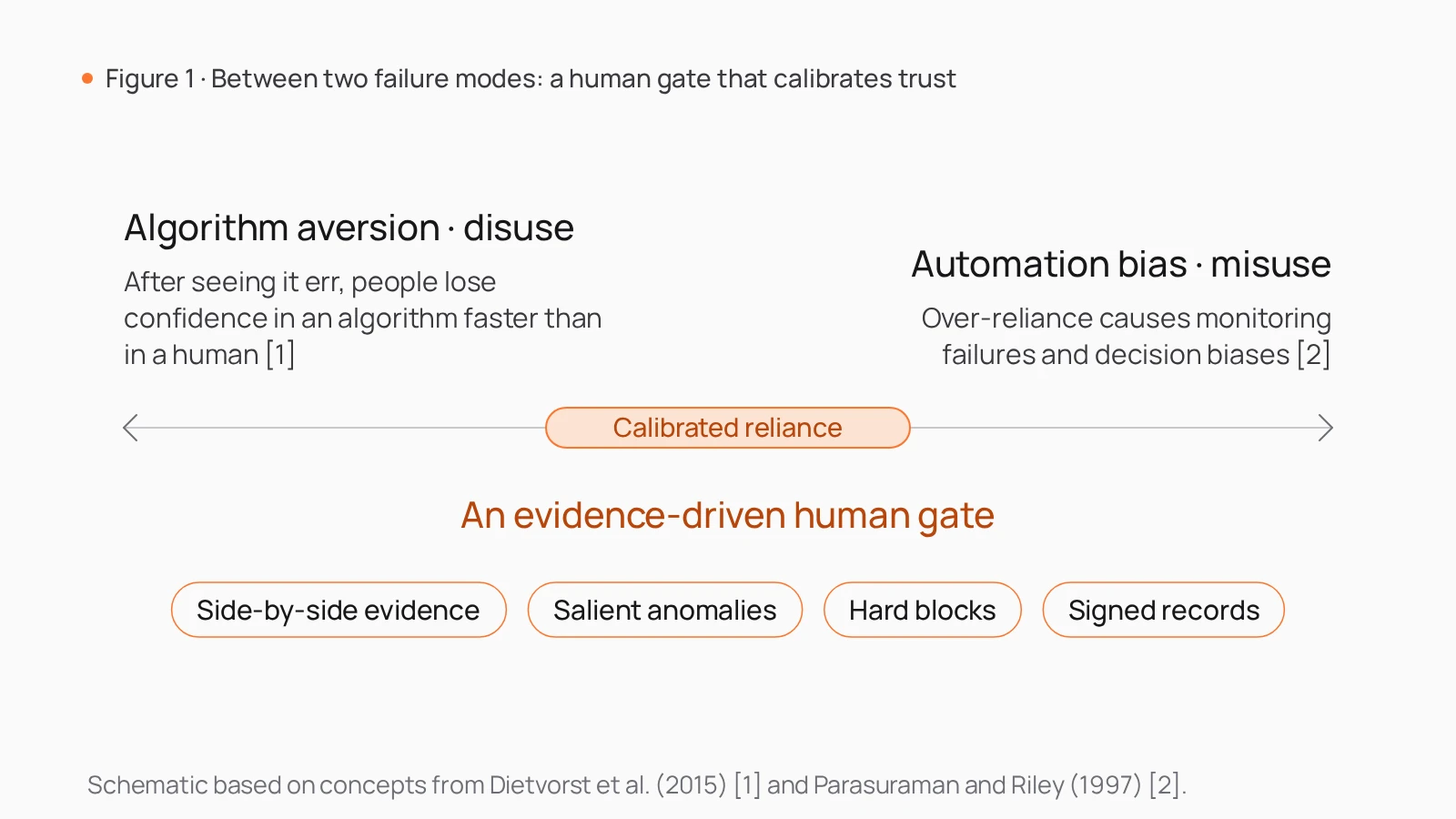
Algorithm aversion and automation bias coexist in human-algorithm collaboration. A human review gate cannot be a lone confirmation button; it must be built as core system architecture with side-by-side evidence, anomaly highlighting, mandatory blocking of high-risk actions, and signed audit trails.

Abandoning the System or Rubber-Stamping It: Two Failure Modes in One Workflow
Imagine an operations team rolling out an automated workflow for document sorting, quote preparation, and refund calculation, placing a single “Confirm” button at the end of the screen. Soon, two opposite behaviors emerge. In legal case-file organization, once paralegals see the system misclassify a single file, they abandon the tool and revert to manual sorting. Meanwhile, in high-volume customer refund and quoting queues, reviewers facing a backlog click “Confirm” repeatedly without checking underlying records, waving through unverified discrepancies.
Neither reaction is simple carelessness. They reflect two documented failure modes in human-automation interaction: algorithm aversion and automation bias coexist. Because both operate at once, a human review gate (Human Gate) is not a transitional compromise while waiting for stronger models, nor can it be reduced to a lone confirmation button. It must be designed as core architecture using side-by-side evidence, anomaly highlighting, mandatory blocking of high-risk actions, and signed audit trails.
Why a Lone "Confirm" Button Fails: Mechanisms from Four Studies
Why do human operators simultaneously reject and over-rely on automated tools? Four studies across behavioral decision making, human factors, and human-computer interaction explain the mechanisms.
First, confidence in an algorithm collapses quickly after an observed mistake. Dietvorst, Simmons, and Massey (2015) studied “algorithm aversion”: although evidence-based algorithms predict the future more accurately than human forecasters, decision makers choosing between a human forecaster and a statistical algorithm often choose the human[1]. Across 5 studies, participants saw an algorithm make forecasts, a human make forecasts, both, or neither, and then decided whether to tie their incentives to the future predictions of the algorithm or the human[1]. Those who saw the algorithm perform were less confident in it and less likely to choose it over an inferior human—even when they saw it outperform the human—because people lose confidence faster in algorithmic than human forecasters after seeing the same mistake[1].
Second, human-automation interaction fails along four dimensions. Parasuraman and Riley (1997) examined studies on the “use, misuse, disuse, and abuse” of automation[2]. “Use” (voluntary activation or disengagement) is shaped by interacting factors of trust, mental workload, and risk, with large individual differences[2]. “Misuse” (over-reliance causing monitoring failures or decision biases) depends on workload, automation reliability and consistency, and the saliency of state indicators[2]. “Disuse” (neglect or underutilization) commonly stems from false alarms when the base rate of the target condition is ignored in setting false-alarm versus omission trade-offs[2]. Finally, “automation abuse”—automating functions without due regard for human performance consequences—defines the operator’s role as a by-product of automation and promotes both misuse and disuse[2].
Defining the operator as a by-product echoes Bainbridge’s (1983) “ironies of automation”[3]. Automating a process can expand rather than eliminate operator problems: designers automate what they can and leave the rest to the human, who must monitor the system and take over in abnormal situations—even though manual skills and process knowledge decay when rarely used, and humans are poor at sustained monitoring of rarely failing systems[3].
Does an “algorithm-in-the-loop” setup resolve this? Green and Chen (2019) posited three principles for ethical, responsible algorithm-in-the-loop decision making and ran a controlled experiment on a crowdsourcing platform evaluating risk-assessment-aided predictions in pretrial release and financial lending across several presentation and structure conditions[4]. While these conditions influenced behavior and sometimes improved performance, only one desideratum was consistently satisfied: under all conditions, participants (1) could not effectively evaluate their own or the risk assessment’s accuracy, (2) failed to calibrate reliance based on its performance, and (3) exhibited bias in their interactions with it[4]. Analyses must therefore expand beyond models to the full sociotechnical contexts of human-algorithm interaction[4].
Engineering the Human Gate: Side-by-Side Evidence, State Blocking, and Signed Handoffs
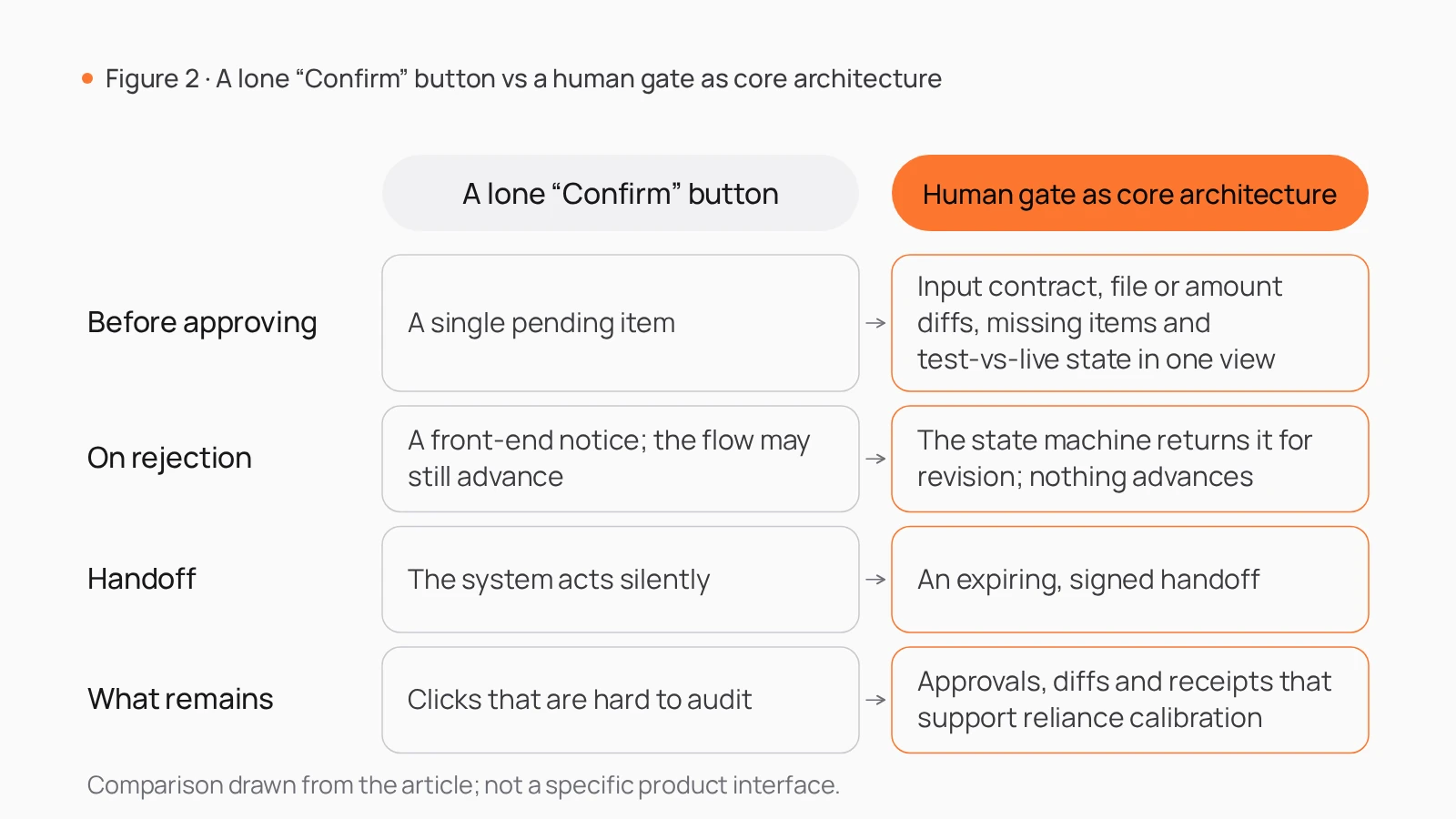
Because operators struggle to calibrate reliance on their own and cannot monitor low-saliency screens effectively, software state machines must pause at high-risk boundaries, place diffs and anomalies alongside the input contract, and block unapproved actions. Within the site’s Agent OS and Commerce modules, three skill packs and their components illustrate this architecture:
First, pairing pre-action scope approval with post-action diff verification. Approve computer actions (S03) requires an explicit initial input: Action goal, account and permitted materials. It runs in four steps: (1) Check readiness (assisted), outputting an available session and bounded context; (2) Approve the action list (human review), where a designated reviewer or requesting user inspects proposed actions—rejected outputs return for revision and do not advance; (3) Act and retain evidence (assisted), capturing screenshots, file diffs, and execution receipts; and (4) Check the changes (human review), verifying changes and anomaly records. For legal services, this pack is a transferable use: a legal assistant can list case-file organization actions, run file and page actions after authorization, and check diffs—provided read/write directories are restricted item by item and external submissions remain outside default permissions. It carries no tag for retail or consumer apps, serving only as a general pattern there.
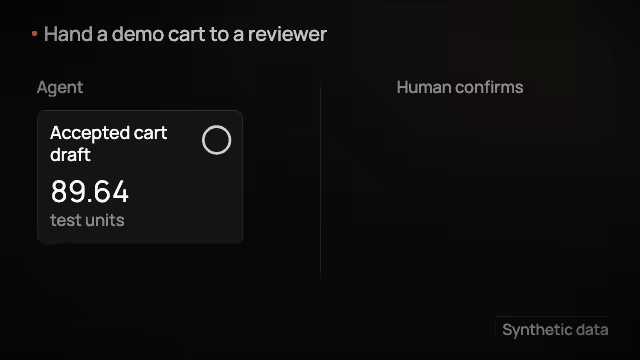
Second, replacing silent execution with signed checkout handoffs. Quote and confirm (S33) takes Customer requirements, available items and quantities across three assisted steps: checking eligibility and prices, assembling supplier quotes (with fees, lead times, and missing items), and preparing a pending cart and total. Step 4, Hand over for confirmation, is a human gate where rejected outputs return for revision. Underneath, Signed agent-to-human checkout handoff (working code by static source inspection) turns booking intent into an expiring, signed browser or mobile handoff, validates context, and fills missing options, while supplier payment and fulfillment remain external. In retail and ecommerce, this pack has a source-supported industry association (consolidating supplier costs, promotions, and a customer cart into an itemized sheet for customer confirmation), though wiring from cart to signed intent is still needed, and the tag indicates only an explicit industry association in source data rather than end-to-end completion.
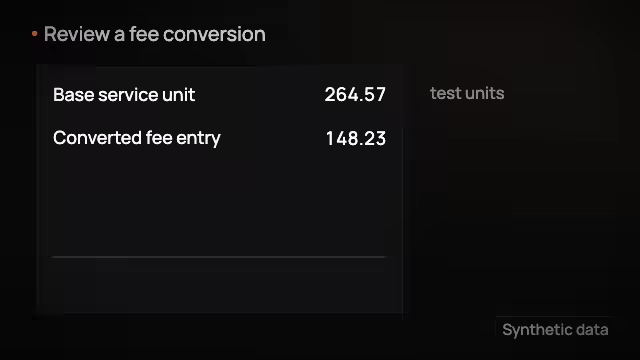
Third, isolating environments and highlighting discrepancies before financial actions. Reconcile payments and refunds (S41) takes Charge details, orders and applicable refund rules. Three assisted steps check amounts and sensitive fields, rehearse or verify payment (separating test and live states), and match receivables against receipts to surface pending discrepancies. Step 4, Approve refunds or corrections, pauses at a human gate before Step 5 reconciles execution state and open items in the same environment. It is a transferable use for lifestyle and consumer apps (aligning digital content charges and payment receipts so support staff can approve duplicate-charge or refund requests): sandbox and live adapters are used one at a time without mixing environments, and actual refunds still require valid authorization and payment wiring.
Three Pre-Pilot Checks for Executive Leaders
Before funding a pilot with human review, a CEO, CDO, or department head can apply three checks:
- Does the review interface show side-by-side evidence and salient anomalies? Check whether reviewers see the input contract, file or amount diffs, missing items, and test-versus-live state indicators in one view before approving, guarding against both misuse and sudden disuse.
- Does the gate enforce a hard state block? Verify that rejecting an action list, quote, or refund stops advancement in the state machine and requires an expiring, signed handoff—not merely a front-end button.
- Do audit records support reliance calibration? Confirm that approvals, rejections, diffs, and receipts are retained so teams can audit human-algorithm accuracy and adjust gate boundaries.
Found it useful? Pass it on.
References
- [1]
Dietvorst, B. J., Simmons, J. P., & Massey, C. (2015). Algorithm aversion: People erroneously avoid algorithms after seeing them err. Journal of Experimental Psychology: General, 144(1), 114–126. doi.org/10.1037/xge0000033
- [2]
Parasuraman, R., & Riley, V. (1997). Humans and Automation: Use, Misuse, Disuse, Abuse. Human Factors, 39(2), 230–253. doi.org/10.1518/001872097778543886
- [3]
Bainbridge, L. (1983). Ironies of automation. Automatica, 19(6), 775–779. doi.org/10.1016/0005-1098(83)90046-8
- [4]
Green, B., & Chen, Y. (2019). The Principles and Limits of Algorithm-in-the-Loop Decision Making. Proceedings of the ACM on Human-Computer Interaction, 3(CSCW), Article 50. doi.org/10.1145/3359152
Related capabilities
Platform modules
Skills packs
S03 · Agent OS
Approve computer actions
Back-office entry, forms and file edits are repetitive computer work you would hand to AI, if you trusted it not to click and change the wrong things.
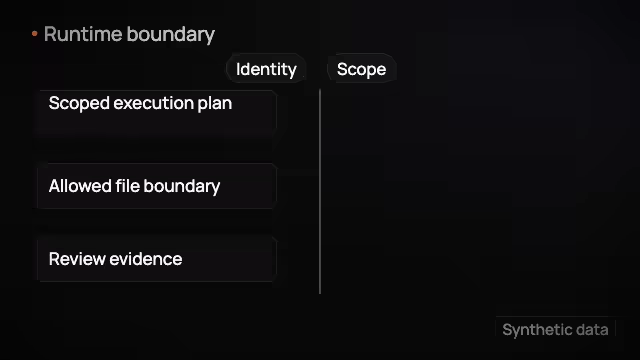
Check identity and action scope, run approved actions and retain page and file changes.
- Check readiness
- Approve the action listHuman review
- Act and retain evidence
- Check the changesHuman review
4 steps2 human reviews8 components
S33 · Commerce
Quote and confirm
For each quote, sales checks prices, asks several suppliers and totals it by hand, and the back-and-forth is slow.
Prepare quotes and line items from requirements, then hand them to the customer for confirmation.
- Check eligibility and prices
- Assemble supplier quotes
- Prepare confirmation details
- Hand over for confirmationHuman review
4 steps1 human reviews4 components
S41 · Commerce
Reconcile payments and refunds
Many payment channels and currencies mean manual spreadsheet reconciliation, and wrong refunds are hard to recover.
Calculate charges, verify payment events and have reviewers resolve discrepancies and refunds.
- Check amounts and sensitive fields
- Rehearse or verify payment
- Match receivables and receipts
- Approve refunds or correctionsHuman review
- Reconcile execution state
5 steps1 human reviews6 components