[Healthcare] Returning the Stethoscope to the Physician: Why the Most Robust Landing Zone for Healthcare AI Is Administrative Intake, Scheduling, and Non-Clinical Notes
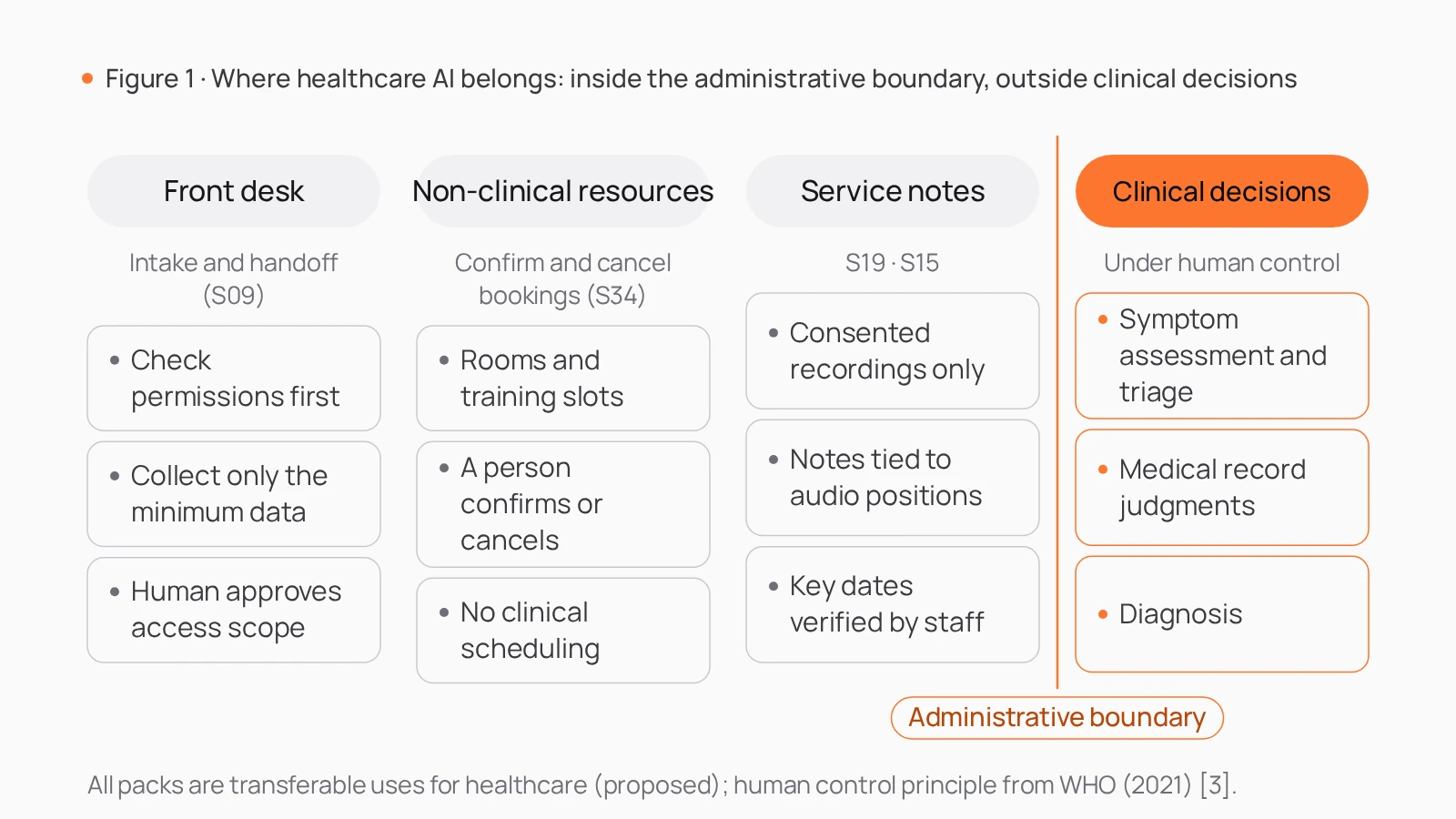
In healthcare settings, the safest and most durable starting point for artificial intelligence is not clinical triage or diagnosis, but non-clinical administrative intake, non-clinical resource booking, and consented service-interview notes governed by human review gates.


Keystrokes in the Exam Room and the Misplaced Ambition of Healthcare AI
Imagine a familiar hospital scenario: in the outpatient clinic, a physician repeatedly shifts attention from the patient to a computer monitor to complete structured forms and coordination logs; meanwhile, at the administrative service desk, staff spend hours fielding routine inquiries, verifying operator permissions, booking non-clinical training rooms, and manually summarizing lengthy recordings of consented service interviews. When healthcare organizations explore large language models to relieve this pressure, proposals frequently jump straight to automated symptom triage or clinical decision support. Yet the moment an automated system crosses from administrative coordination into clinical judgment, a minor transcription error or missing context can translate directly into patient safety hazards and unresolved liability.
This tension highlights a foundational boundary for healthcare engineering: in medical settings, artificial intelligence should be strictly confined to non-clinical administrative intake, non-clinical resource scheduling, and consented service-interview notes, excluding clinical triage, chart adjudication, or diagnosis. Within the capability catalog on rlab.works, every skill pack mapped to healthcare represents a transferable use rather than an out-of-the-box clinical tool. Relieving front-line burden requires establishing strict input contracts, access boundaries, and human review gates across administrative workflows first.
Clerical Burden, the Patient-Doctor Relationship, and Human Control: What the Literature Shows
Why should healthcare AI prioritize administrative and workflow support while leaving clinical judgment under human authority? Research across clinical operations, digital medicine, and global health governance explains the underlying mechanisms.
First, digital systems that fail to streamline administrative work become a primary driver of clinician exhaustion. Shanafelt et al. (2016) surveyed US physicians across all specialties between August and October 2014 to evaluate associations between the electronic environment, clerical burden, and physician burnout and professional satisfaction, measuring burnout with validated metrics[1]. The survey collected information on electronic health records (EHRs), computerized physician order entry (CPOE), and electronic patient portals. Among 6375 responding physicians in active practice, 5389 (84.5%) reported using EHRs; among 5892 physicians who indicated that CPOE was relevant to their specialty, 4858 (82.5%) reported using CPOE[1]. On univariate analysis, physicians who used EHRs and CPOE had lower satisfaction with the time spent on clerical tasks and higher rates of burnout; the authors conclude that physicians’ satisfaction with their EHRs and CPOE was generally low and that users of these systems were at higher risk for professional burnout[1]. Digitizing records without reducing clerical friction does not free up clinical capacity; adding unverified automated drafts into clinical systems risks compounding that clerical burden.
Second, workflow efficiency and the therapeutic relationship sit in delicate balance. Topol (2019) notes that artificial intelligence—and deep learning in particular, enabled by labeled big data, enhanced computing power, and cloud storage—is beginning to affect medicine at three levels: for clinicians, predominantly through rapid, accurate image interpretation; for health systems, by improving workflow and the potential for reducing medical errors; and for patients, by enabling them to process their own data to promote health[2]. At the same time, Topol highlights persistent limitations, including bias, privacy and security risks, and lack of transparency[2]. Over time, substantial gains in accuracy, productivity, and workflow are likely to materialize, but whether those gains will be used to strengthen the patient-doctor relationship or accelerate its erosion remains an open question[2].
Third, international governance standards set an explicit boundary around clinical autonomy. The World Health Organization (WHO, 2021) guidance on the ethics and governance of AI for health establishes six consensus principles: protect human autonomy; promote human well-being, human safety, and the public interest; ensure transparency, explainability, and intelligibility; foster responsibility and accountability; ensure inclusiveness and equity; and promote AI that is responsive and sustainable[3]. Crucially, the guidance states that humans should remain in control of health-care systems and medical decisions[3]. Restricting software automation to non-clinical administrative tasks—and enforcing human sign-off before records or responses leave the desk—translates this governance principle into system architecture.
Engineering Administrative Workflows: Transferable Skill Packs, Human Gates, and Adaptation Boundaries
Translating these findings into software requires separating administrative assistance from clinical decision-making and wiring blocking human review gates into the workflow state machine. In the Healthcare industry catalog on rlab.works, no skill pack carries a source-supported industry label; all mapped packs are classified as transferable use, and every skill pack is currently a proposed composition demonstrated with synthetic data and not yet connected to live services. Adopting them in a healthcare organization requires explicit domain adaptation across key operational workflows:
- Administrative intake and scoped record handoff: Within the Agent OS module, the Intake and handoff (S09) skill pack takes a service request, identity assertions, and assignment rules as its initial input, stepping through Confirm account and role → Create the service record → Approve data access (human review) → Hand over and record. Adapted to a hospital service desk, staff verify operator access first, collect only minimum necessary administrative details, pause at a human review gate to approve the scoped data package, and hand the record to the appropriate administrative coordinator. Rejected packages return for revision and do not advance. Adaptation requires connecting the hospital’s own identity and ticketing infrastructure (for example, using working-code components inspected statically such as tenant identity, enterprise SSO, provisioning and access control) and restricting scope strictly to administrative requests—never symptom-based triage.
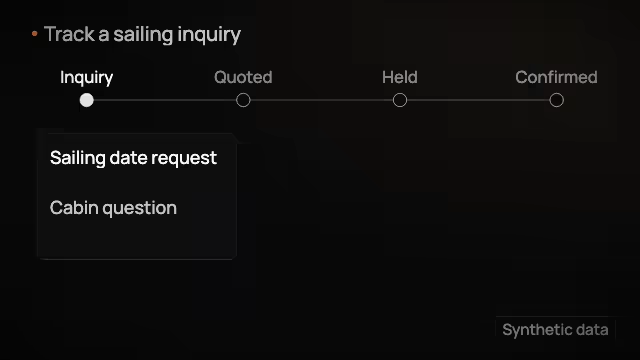
- Confirming and cancelling non-clinical resource bookings: Within the Commerce module, Confirm and cancel reservations (S34) accepts requirements, participants, time slots, and cancellation terms, checks availability, forms a short-lived confirmation, and pauses at Confirm or cancel with a person (human review) before reconciling provider state and syncing notifications. In a hospital, this pattern transfers to non-clinical resources such as conference rooms or equipment training slots. Adaptation requires replacing all hotel supplier interfaces, pricing logic, and passenger fields with connections to internal administrative resource calendars, while excluding clinical scheduling.
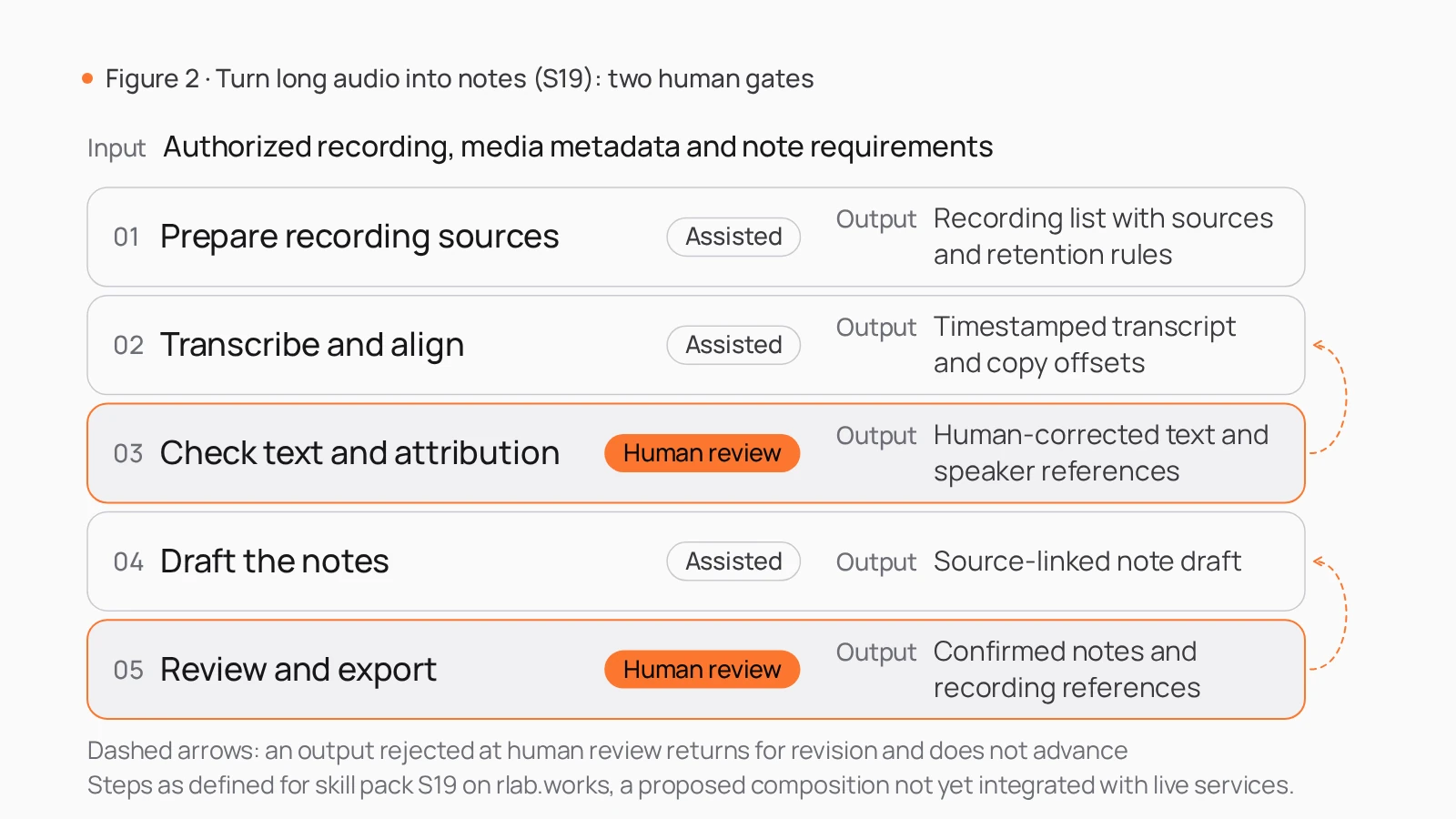
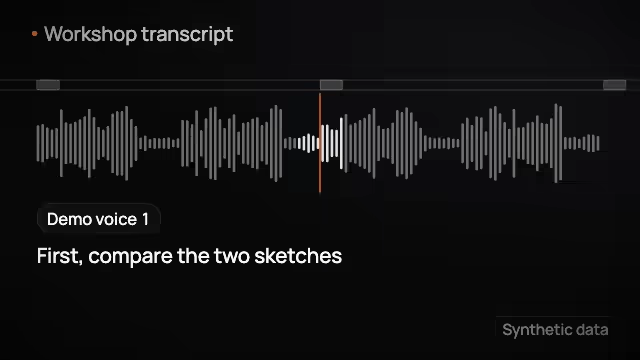
- Traceable notes from consented service interviews: Within the Intelligence module, Turn long audio into notes (S19) processes an authorized recording, media metadata, and note requirements through Prepare recording sources → Transcribe and align → Check text and attribution (human review) → Draft the notes → Review and export (human review). Using working-code components such as Long-audio transcription, overlap alignment and speaker stitching, it turns consented recordings of administrative service interviews into timestamped notes where staff verify names and dates before export. In healthcare, these notes serve solely as administrative service records—never for diagnosis or automated chart judgments—and require strict retention windows and access permissions.
- Verified spoken replies for routine inquiries: Within the AI Gateway module, Connect speech services (S15) uses speech transcription and audio translation adapters to convert consented audio into reviewable text and candidate intents, pauses at Check reply content (human review) so staff can verify dates or instructions, and then generates a spoken reply and inspects session handoff logs. Its adaptation boundary limits deployment to administrative Q&A, with transcription, the human review interface, and live session handling orchestrated separately.
Architectural honesty also requires noting component-level constraints. Component maturity ratings reflect static source inspection rather than hospital production deployment; for instance, speaker stitching in long-audio assembly is heuristic and varies by recording source, making the human review gates for speaker attribution and final export essential.
Pre-Pilot Checks for Hospital and IT Leaders
Before funding an administrative AI pilot, hospital executives and health IT leaders can apply several concrete checks to verify that the system respects clinical and operational boundaries:
- Is the workflow contract decoupled from clinical triage and diagnosis? Verify that initial inputs are restricted to administrative intake, facility scheduling, or consented service communications. Any request involving symptom evaluation or clinical prioritization must stay outside administrative automation.
- Do human review gates have blocking authority before external action? Confirm that data handoffs, slot confirmations, spoken replies containing dates, and interview note exports pause unconditionally for an assigned reviewer, and that rejected outputs return for revision without advancing.
- Have consent rules, retention limits, and domain interfaces been adapted? Ensure that audio workflows enforce explicit consent, attach source timestamps to drafted notes, restrict retention periods and viewing permissions, and replace commercial travel fields with hospital administrative schemas.
Found it useful? Pass it on.
References
- [1]
Shanafelt, T. D., Dyrbye, L. N., Sinsky, C., Hasan, O., Satele, D., Sloan, J., & West, C. P. (2016). Relationship Between Clerical Burden and Characteristics of the Electronic Environment With Physician Burnout and Professional Satisfaction. Mayo Clinic Proceedings, 91(7), 836–848. doi.org/10.1016/j.mayocp.2016.05.007
- [2]
Topol, E. J. (2019). High-performance medicine: the convergence of human and artificial intelligence. Nature Medicine, 25(1), 44–56. doi.org/10.1038/s41591-018-0300-7
- [3]
World Health Organization (WHO). (2021). Ethics and governance of artificial intelligence for health: WHO guidance. World Health Organization. who.int ↗
Related capabilities
Platform modules
- IntelligenceMonitoring, media, documents, retrieval, geography and analytics.
- Agent OSRecoverable agent execution, tools, identity and delivery under governance.
- CommercePayments, orders, membership, content and growth workflows.
- AI GatewayMulti-protocol model routing, policy, metering and capability APIs.
Skills packs
S19 · Intelligence
Turn long audio into notes
Hours of meetings and interviews, and writing the notes means listening to it all again.
Organize long recordings and timestamps, review transcripts and produce traceable notes.
- Prepare recording sources
- Transcribe and align
- Check text and attributionHuman review
- Draft the notes
- Review and exportHuman review
5 steps2 human reviews6 components

S09 · Agent OS
Intake and handoff
Support has to verify the customer, look up records and find an owner, and the case changes hands several times before anyone takes it.
Verify operator access, collect service issues and hand records to the appropriate person.
- Confirm account and role
- Create the service record
- Approve data accessHuman review
- Hand over and record
4 steps1 human reviews10 components
S34 · Commerce
Confirm and cancel reservations
Bookings depend on price-lock windows and cancellations on supplier receipts, and local success often does not match the supplier's state.
Check available resources and short-lived quotes, then follow supplier states and cancellation requests after confirmation.
- Intake and check availability
- Create a short-lived confirmation
- Confirm or cancel with a personHuman review
- Reconcile resource-provider state
- Sync and notify
5 steps1 human reviews9 components
S15 · AI Gateway
Connect speech services
Adding voice to a system means wiring transcription, understanding and speech synthesis separately.
Turn speech into reviewable text, respond with a selected voice and inspect the session.
- Transcribe and interpret
- Check reply contentHuman review
- Generate spoken reply
- Check session handoff
4 steps1 human reviews4 components