A Governed Agent Runtime: Why Production Needs Task Graphs, Sandboxes and Checkpoint Recovery Instead of Open-Ended Autonomous Loops
Open-ended tool loops are prone to repeated retries and privilege overreach when they encounter timeouts, layout changes, or permission denials; a production runtime must constrain models through explicit task graphs, sandboxes, least privilege, and durable checkpoints.


Why Open-Ended Tool Loops Drift in Production Environments
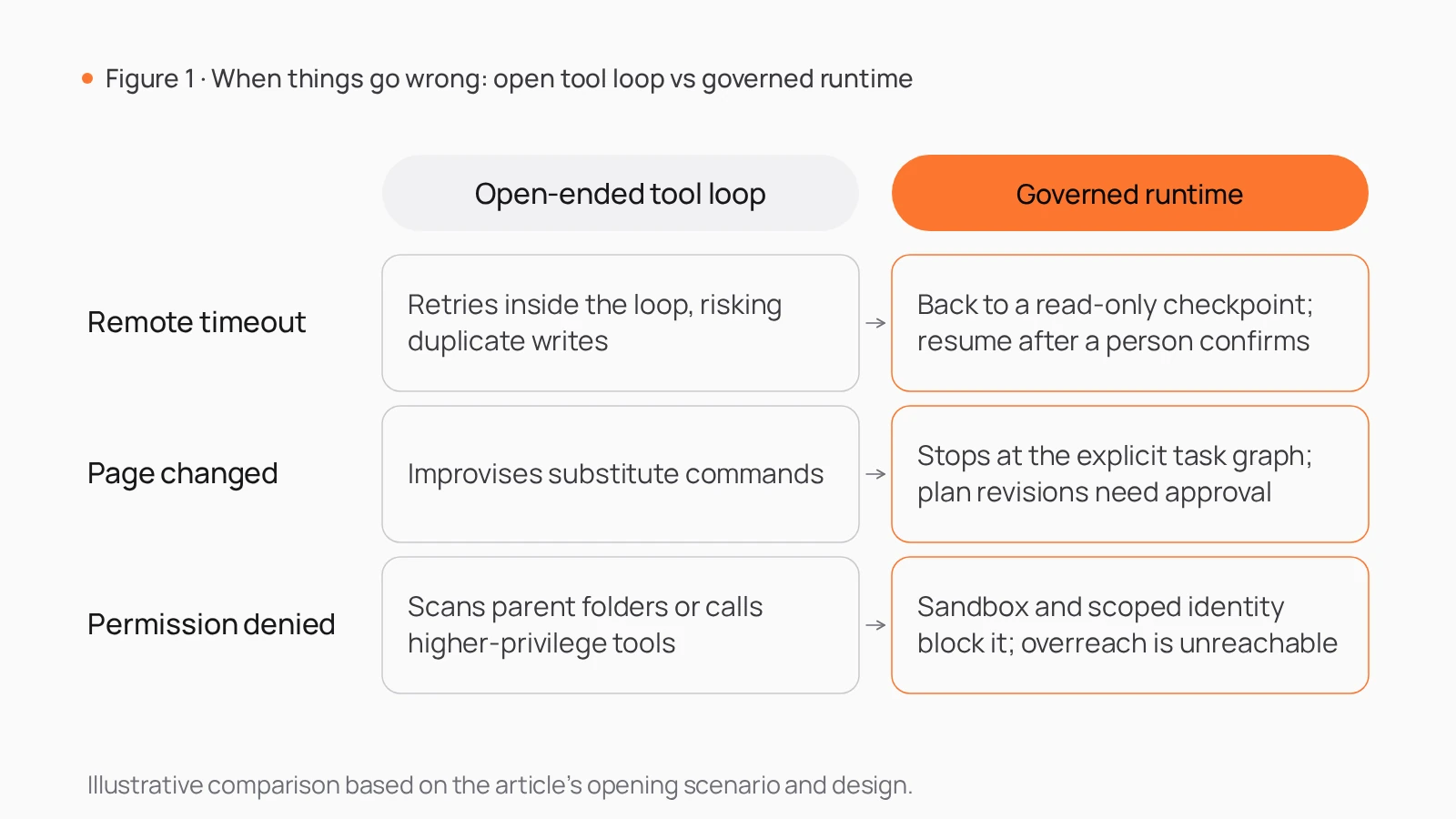
Consider a familiar engineering scenario: a team connects a tool-calling language model to internal systems, allowing it to interleave reasoning steps with browser actions, file operations, and database queries inside an unconstrained loop. During controlled demonstrations, the loop retrieves records and populates forms smoothly. Once exposed to production traffic, however, routine friction appears—a web page changes its layout, an upstream API times out, or a directory returns a permission denial. Instead of halting cleanly, an unconstrained loop may treat the error message as a puzzle to solve on its own, retrying failed calls, constructing alternative commands, or probing parent directories and higher-privilege credentials to bypass the obstacle.
This gap highlights the structural difference between a demo and production infrastructure: open-ended tool loops are prone to repeated retries and privilege overreach when they encounter timeouts, layout changes, or permission denials; a production runtime must constrain models through explicit task graphs, sandboxes, least privilege, and durable checkpoints. Handing execution control entirely to in-context reasoning cannot satisfy enterprise requirements for predictability and security.
Interleaved Reasoning and Tool Use Meet Classical Protection Architecture
Machine learning research explains why coupling language models with external actions is effective, while computer systems literature explains why model-layer capability cannot substitute for runtime-layer protection.
On the modeling side, Yao et al. (2023) noted that reasoning (such as chain-of-thought prompting) and acting (such as action plan generation) had primarily been studied as separate topics, and introduced ReAct so large language models generate reasoning traces and task-specific actions in an interleaved manner[1]. Reasoning traces help the model induce, track, and update action plans and handle exceptions, while actions let it interface with external sources such as knowledge bases or environments to gather additional information[1]. On question answering (HotpotQA) and fact verification (Fever), interacting with a simple encyclopedia API overcame hallucination and error propagation prevalent in chain-of-thought reasoning while producing more interpretable trajectories than baselines without reasoning traces[1]. On two interactive decision making benchmarks (ALFWorld and WebShop), ReAct outperformed imitation and reinforcement learning methods by an absolute success rate of 34% and 10% respectively, prompted with only one or two in-context examples[1].
Complementing interleaved prompting, Schick et al. (2023) addressed the paradox that language models solve new tasks from a few instructions yet struggle with basic functionality like arithmetic or factual lookup where simpler models excel[2]. They introduced Toolformer, trained in a self-supervised way with a handful of demonstrations per API to decide which APIs to call, when to call them, what arguments to pass, and how to incorporate results into future token prediction[2]. Incorporating a calculator, a question-answering system, two different search engines, a translation system, and a calendar, Toolformer achieved substantially improved zero-shot performance across downstream tasks, often competitive with much larger models, without sacrificing core language modeling abilities[2].
Yet both approaches address how a model formulates action intents—not how a host system enforces safety when those intents modify state. That architectural problem was framed by Saltzer and Schroeder (1975) in their tutorial on protecting computer-stored information from unauthorized use or modification[3]. Concentrating on the hardware and software structures necessary to support information protection, their work detailed the desired functions and design principles of protection and authentication mechanisms, and examined modern protection architectures, the relation between capability systems and access control list systems, and protected subsystems and objects[3].
Read together, these works establish a clear boundary. A language model’s reasoning trace and tool selection are probabilistic generation processes; even when they handle semantic exceptions in benchmarks, they do not constitute deterministic access control. In production, the model should propose plans and candidate arguments, while dependency ordering, permission scopes, execution isolation, and recovery must be enforced by a governed runtime.
Engineering a Governed Runtime: Task Graphs, Sandboxes, Scoped Identity, and Checkpoints
Translating protection principles into software engineering turns an implicit prompt loop into an explicit state machine surrounded by guardrails. Within the Agent OS module on rlab.works, this runtime governance is structured around coordinated skill packs and components.
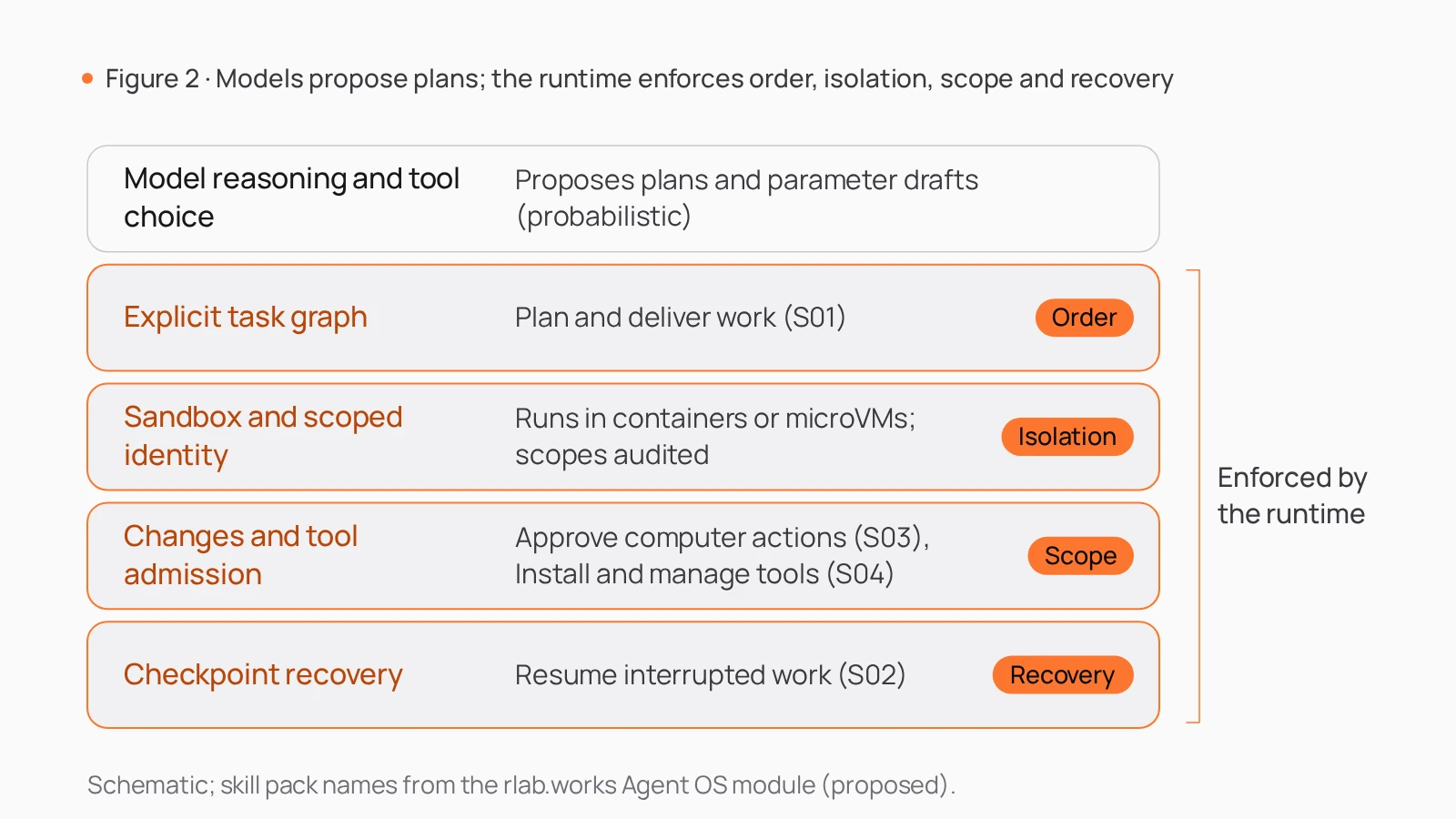
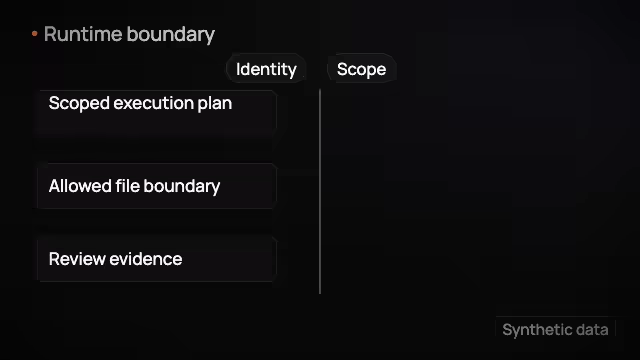
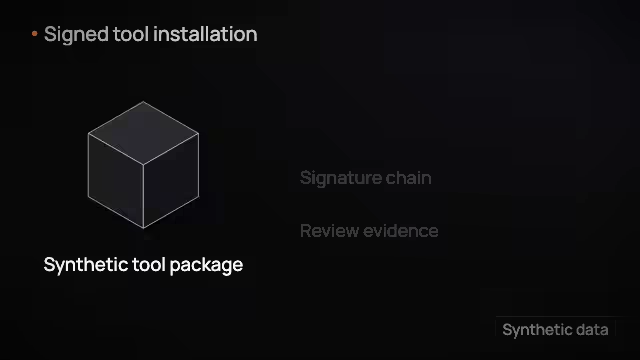
Second, execution runs inside sandboxes under least-privilege identities. The Sandboxed agent jobs and artifacts component (currently a prototype) dispatches jobs into container or microVM environments, performs policy checks, restricts scope, and collects artifacts. Meanwhile, the “Scoped agent identity and authorization” component authenticates access, verifies signed principals, binds operations to accounts, enforces tool permission scopes, and audits requests. For desktop or file modifications, Approve computer actions (S03) checks identity and permitted materials, pauses for human approval of the action list, and retains screenshots, file diffs, and execution receipts for verification. At the tool boundary, Install and manage tools (S04) checks signatures and license checklists, requires human approval of account scopes before installation and registration, and enforces call inspection and rollback checks.
Third, checkpoint recovery replaces blind retries. When a session hits a timeout or disconnect, Resume interrupted work (S02) takes the interrupted session and backup, recovers verified read-only history and the pending position, and pauses for human confirmation of the resume point before resuming execution and inspecting results.
Applying these workflows across industries requires stating their adaptation boundaries and current maturity plainly. None of the skill packs above carries a “source-supported industry” tag for the sectors discussed here; they serve either as transferable uses requiring domain adaptation or as general patterns:
- In manufacturing and industrial settings, Plan and deliver work (S01) is a transferable use: it splits equipment maintenance goals into inspection, material preparation, and review tasks with shift-handoff evidence, but orchestrates software tasks and records only—physical repair is performed by personnel, and work permits and confirmation points must be configured (no sector tag for enterprise or legal).
- In legal services, Approve computer actions (S03) is a transferable use where a legal assistant lists file-organization operations, runs authorized file and page actions, and checks diffs; read and write directories must be restricted item by item, and external filing is outside default permissions (no sector tag for enterprise or manufacturing).
- In business and general enterprise services, Install and manage tools (S04) is a transferable use for verifying provenance, licenses, and account scopes before installing team tools, requiring adapters matched to package formats and clients plus failure and revocation paths (no sector tag for manufacturing or legal).
- Resume interrupted work (S02) is transferable only for consumer applications and serves as a general pattern in enterprise, manufacturing, and legal settings; imported history remains read-only and cannot trigger automatic execution or billing without a native checkpoint or explicit confirmation of a new task.
Every skill pack on the site is a proposed composition demonstrated with synthetic data and not yet connected to live services. Component maturity ratings reflect static source inspection rather than production deployment—“Goal planning and versioned task graphs” and “Scoped agent identity and authorization” are working code under static inspection, while “Sandboxed agent jobs and artifacts” is a prototype.
Pre-Pilot Checks for Engineering and Executive Leaders
Before funding an agent pilot that touches internal systems, leaders can apply architectural checks to verify whether the runtime is governed:
- Does the runtime enforce an explicit task graph with blocking scope approval? Verify that the system generates a dependency-aware plan and pauses for human confirmation before invoking tools, and that rejected plans are blocked by the state machine.
- Are execution environments and credentials isolated by least privilege? Confirm that tasks run inside policy-checked sandboxes, actions bind to scoped accounts and directories, and tool onboarding includes license checks and rollback paths.
- Are silent autonomous retries prohibited after interruptions? Ensure that timeouts or disconnections freeze execution at a verified read-only checkpoint and require human confirmation of the resume point before continuing, preventing cascading retries or duplicate charges.
Found it useful? Pass it on.
References
- [1]
Yao, S., Zhao, J., Yu, D., Du, N., Shafran, I., Narasimhan, K., & Cao, Y. (2023). ReAct: Synergizing Reasoning and Acting in Language Models. International Conference on Learning Representations (ICLR 2023). arxiv.org ↗
- [2]
Schick, T., Dwivedi-Yu, J., Dessì, R., Raileanu, R., Lomeli, M., Hambro, E., Zettlemoyer, L., Cancedda, N., & Scialom, T. (2023). Toolformer: Language Models Can Teach Themselves to Use Tools. Advances in Neural Information Processing Systems (NeurIPS), 36. arxiv.org ↗
- [3]
Saltzer, J. H., & Schroeder, M. D. (1975). The protection of information in computer systems. Proceedings of the IEEE, 63(9), 1278–1308. doi.org/10.1109/PROC.1975.9939
Related capabilities
Platform modules
Skills packs
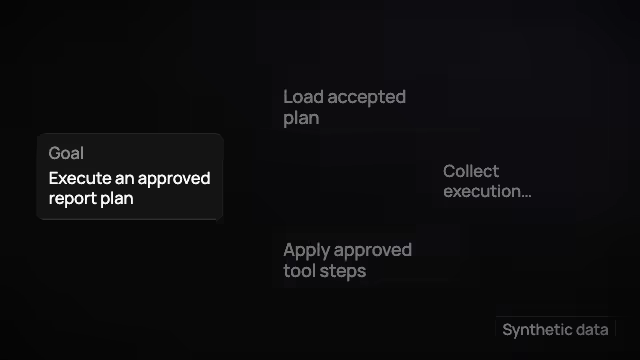
S01 · Agent OS
Plan and deliver work
Hand AI a big job and it often stops halfway or drifts, and nobody can tell how far it got.
Break a goal into dependent tasks, confirm execution and deliver reviewable results.
- Plan the steps
- Approve the scopeHuman review
- Run and collect
- Review and hand overHuman review
4 steps2 human reviews7 components
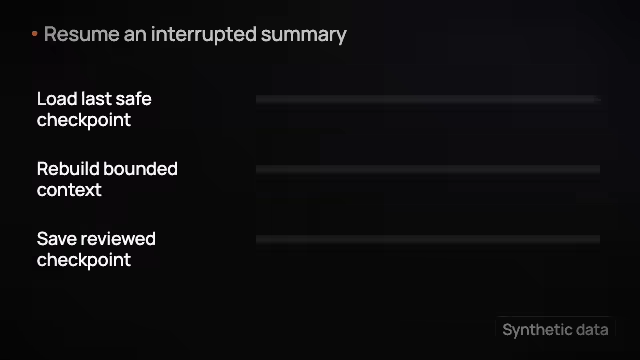
S02 · Agent OS
Resume interrupted work
A long job drops halfway through on a disconnect, timeout or restart, and usually starts over.
Check history and runtime readiness, resume unfinished work and review the result.
- Recover the history
- Confirm the resume pointHuman review
- Resume execution
- Inspect the resultHuman review
4 steps2 human reviews6 components
S03 · Agent OS
Approve computer actions
Back-office entry, forms and file edits are repetitive computer work you would hand to AI, if you trusted it not to click and change the wrong things.
Check identity and action scope, run approved actions and retain page and file changes.
- Check readiness
- Approve the action listHuman review
- Act and retain evidence
- Check the changesHuman review
4 steps2 human reviews8 components
S04 · Agent OS
Install and manage tools
Adding plugins and account connections to AI is easy, but unknown plugins and broad permissions are a risk.
Check tool provenance and licenses, approve account scopes, install and inspect calls.
- Check packages and licenses
- Approve account scopesHuman review
- Install and register
- Check calls and rollbackHuman review
4 steps2 human reviews7 components