E33 SeriesE · Organisation & people
From "Prompt Sorcery" to Versioned Skill Packs: Why Enterprises Cannot Run Core Operations on Employees' Private Prompt Stashes
Personal prompt stashes break when language models change or key staff leave; organizations need to turn tacit prompting habits into versioned skill packs and prompt registries governed by input contracts and human review gates.


When Staff Leave or Models Change: Why Private Prompt Stashes Cannot Sustain Core Operations
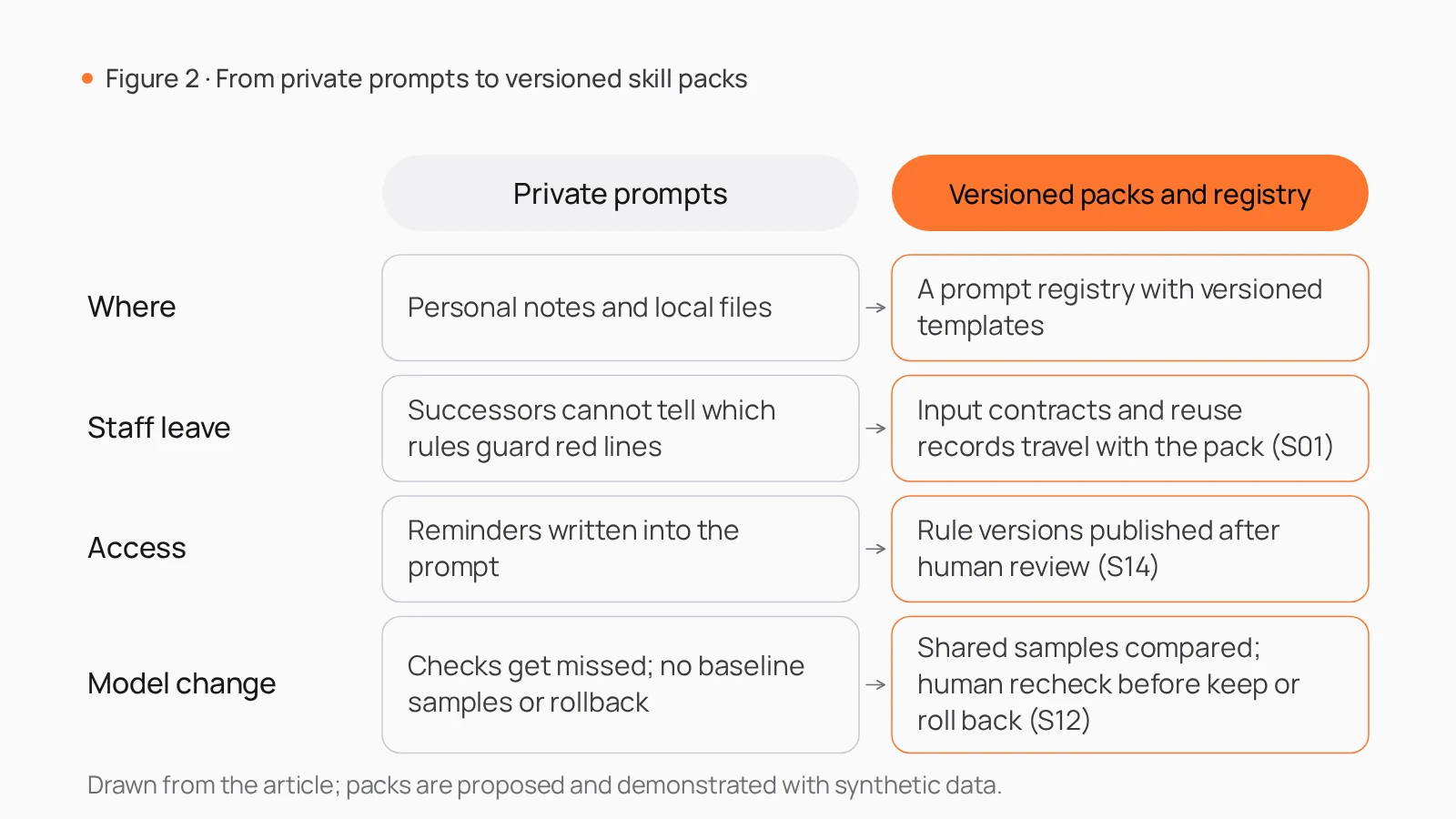
Consider a familiar scenario: a business unit relies on a lengthy prompt template saved on a senior analyst’s laptop to draft compliance reviews and customer responses. When that analyst transfers, colleagues inherit a dense block of instructions without documentation explaining which phrases reflect regulatory boundaries. Shortly afterward, the underlying large language model endpoint is updated—or swapped to another provider to control costs—and the inherited prompt begins omitting critical checks, with no baseline samples or rollback path to diagnose the failure.
Large language model steps are inherently probabilistic; operational consistency in enterprise systems comes from surrounding engineering contracts, not magic wording. Personal prompt stashes break when models change or personnel depart. Organizations should turn informal prompting know-how into versioned skill packs and governed prompt registries backed by explicit input contracts and human sign-off gates.
From Tacit Tricks to Declarative Pipelines: What the Research Shows About Prompt Fragility
Why do individual prompt collections fail to scale into durable organizational capability? Insights from organizational knowledge theory, human-computer interaction, and machine learning systems explain the mechanism.
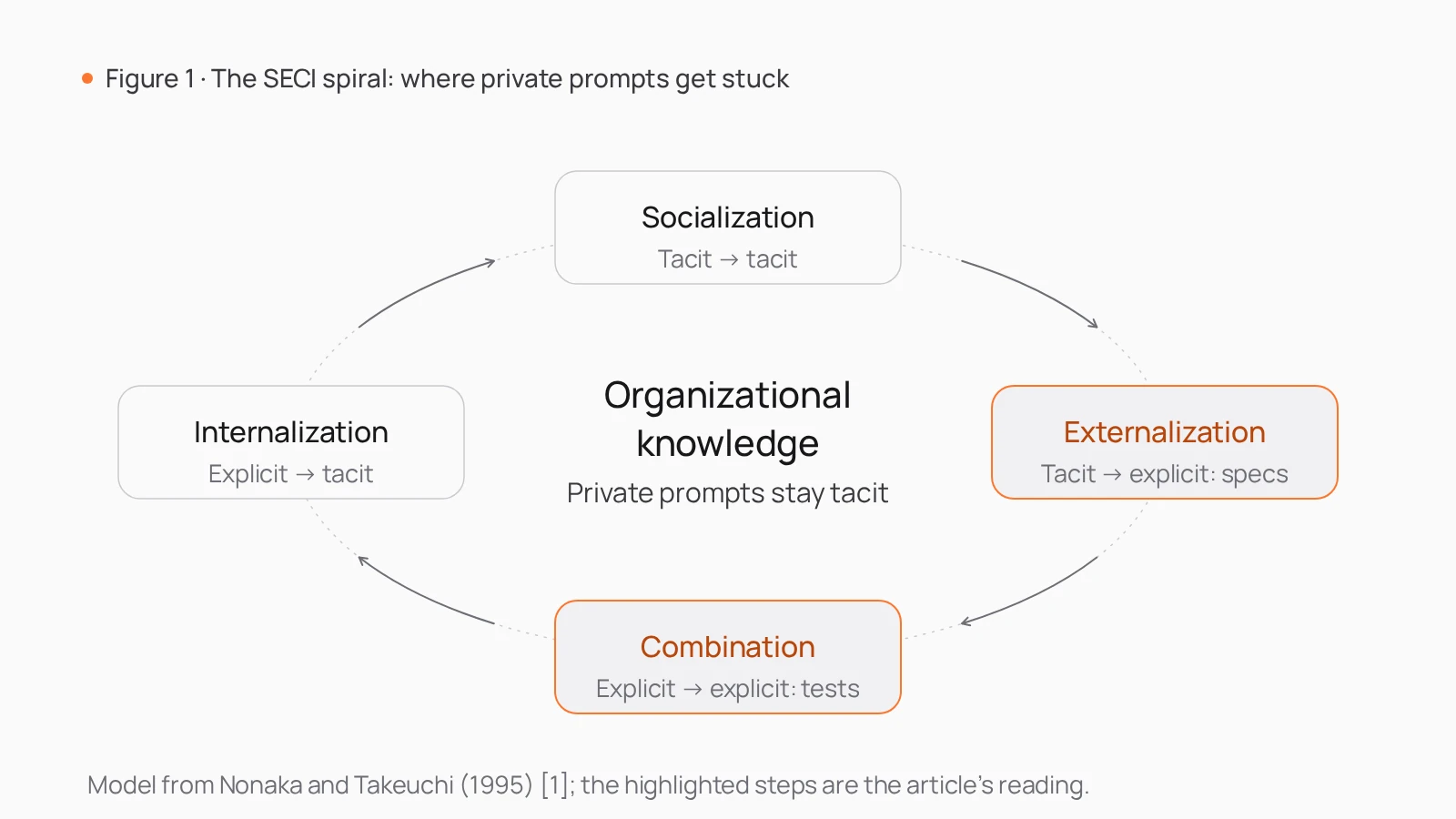
Nonaka and Takeuchi (1995) distinguish tacit knowledge—personal, context-specific, and hard to formalize—from explicit knowledge, which is codified and transmittable in formal language[1]. They describe organizational knowledge creation as a spiral across socialization (tacit to tacit), externalization (tacit to explicit), combination (explicit to explicit), and internalization (explicit to tacit), known as the SECI model[1]. When employees keep prompting habits in personal notes, that know-how remains tacit; without externalization into explicit schemas and combination into shared workflow standards and evaluation suites, individual intuition cannot become a transferable asset[1].
At the pipeline level, hard-coded prompt strings also break down across complex tasks and model changes. Khattab et al. (2024) note that existing language model pipelines are typically implemented using hard-coded “prompt templates”—lengthy strings discovered via trial and error[3]. Toward a systematic approach, they introduce a programming model that abstracts language model pipelines as text transformation graphs, invoking models through parameterized declarative modules that learn to compose prompting, finetuning, augmentation, and reasoning techniques, paired with a compiler that optimizes any pipeline to maximize a given metric[3]. Across case studies on math word problems, multi-hop retrieval, complex question answering, and agent loop control, compiling succinct declarative programs within minutes enabled tested language models to self-bootstrap pipelines that outperformed standard few-shot prompting generally by over 25% and 65%, respectively, and beat pipelines with expert-created demonstrations by up to 5-46% and 16-40%, respectively[3]. Moreover, programs compiled to open and relatively small models—such as a 770M-parameter model—were competitive with approaches relying on expert-written prompt chains for proprietary models[3]. Durable engineering value lies in declarative module boundaries, explicit metrics, and systematic verification when models change.
Engineering Versioned Skill Packs: Input Contracts, Access Rules, and Model Comparison
Translating these findings into enterprise architecture means replacing scattered prompt files with governed registries, structured workflows, and mandatory human checkpoints. Within the Agent OS and AI Gateway modules on rlab.works, this pattern is designed around versioned skill packs and underlying components:
First, open-ended prompting is replaced by structured task planning. In Agent OS, the Plan and deliver work (S01) skill pack starts from Goal, scope and delivery requirements. It breaks the goal into a dependent task plan (Plan the steps), then pauses at a human gate (Approve the scope) where an assigned reviewer or requesting user inspects the plan; a rejected output returns for revision and does not advance. Once approved, Run and collect gathers task results and runtime evidence, followed by a final human gate (Review and hand over) producing an accepted delivery package and reuse record. Underneath, Reusable skill extraction, evaluation and solution packs extracts skills from completed work, manages versions and evaluations, and installs solution packs with task and skill bindings, while Auditable workflows, human confirmation and decision review persists versioned workflows, checks permissions, pauses for human decisions, and records review outcomes.
Second, access control and prompt management are separated from conversational instructions. In AI Gateway, Prompt registry, cache and semantic policies manages prompt templates and caches, identifies intent, and produces context and guardrail evidence. Alongside it, the Set access rules (S14) skill pack takes Team roles, service catalog and access requirements as input, drafts role and request rules (Define access scope), and pauses at a human gate (Validate and review changes) before publishing an approved rule version. After Apply access rules processes allowed, denied, or pending-approval requests, a final human gate (Review request evidence) records an acceptance conclusion and rollback-ready version.
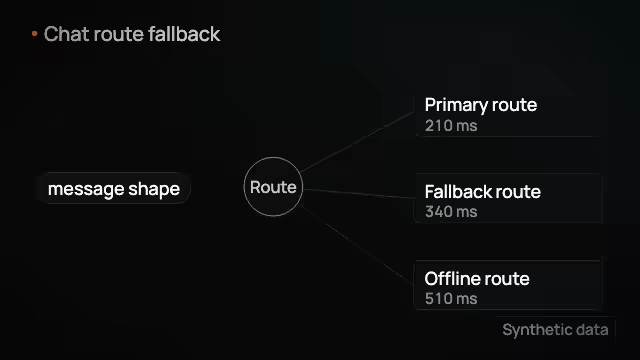
Third, model switches are governed by shared sample evaluation. The Compare and switch models (S12) skill pack takes Task samples, available services and selection criteria as input, checks candidate services (Check candidate services), compares quality, errors, and cost on shared samples (Compare sample results), and pauses for human review (Review switch proposals). Only after acceptance does it configure primary and fallback routing and quotas (Configure primary and fallback), followed by a human check (Recheck samples) recording post-switch evidence and retention decisions.
Management Checks Before Funding a Production Workflow
Before funding a workflow pilot, leaders can apply concrete checks to eliminate private prompt stashes:
- Are prompts and skills in a versioned registry with input contracts? Verify that templates, schemas, and evaluation samples reside in a shared repository rather than on personal laptops.
- Are access boundaries enforced by gateway rules and identity systems? Confirm that role permissions undergo human diff review, test queries, and identity checks rather than trusting prompt wording.
- Is every model switch gated by regression evidence on shared samples? Require quality, error, and cost comparisons on shared samples—with human sign-off and a rollback-ready route—before changing models.
Found it useful? Pass it on.
References
- [1]
Nonaka, I., & Takeuchi, H. (1995). The Knowledge-Creating Company: How Japanese Companies Create the Dynamics of Innovation. Oxford University Press. global.oup.com ↗
- [2]
Zamfirescu-Pereira, J. D., Wong, R. Y., Hartmann, B., & Yang, Q. (2023). Why Johnny Can't Prompt: How Non-AI Experts Try (and Fail) to Design LLM Prompts. Proceedings of the 2023 CHI Conference on Human Factors in Computing Systems (CHI '23), Article 437. doi.org/10.1145/3544548.3581388
- [3]
Khattab, O., Singhvi, A., Maheshwari, P., Zhang, Z., Santhanam, K., Vardhamanan, S., Haq, S., Sharma, A., Joshi, T. T., Moazam, H., Miller, H., Zaharia, M., & Potts, C. (2024). DSPy: Compiling Declarative Language Model Calls into Self-Improving Pipelines. International Conference on Learning Representations (ICLR 2024) / arXiv:2310.03714. arxiv.org ↗
Related capabilities
Platform modules
Skills packs
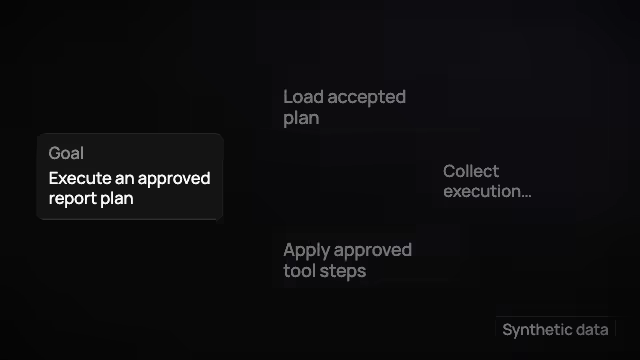
S01 · Agent OS
Plan and deliver work
Hand AI a big job and it often stops halfway or drifts, and nobody can tell how far it got.
Break a goal into dependent tasks, confirm execution and deliver reviewable results.
- Plan the steps
- Approve the scopeHuman review
- Run and collect
- Review and hand overHuman review
4 steps2 human reviews7 components
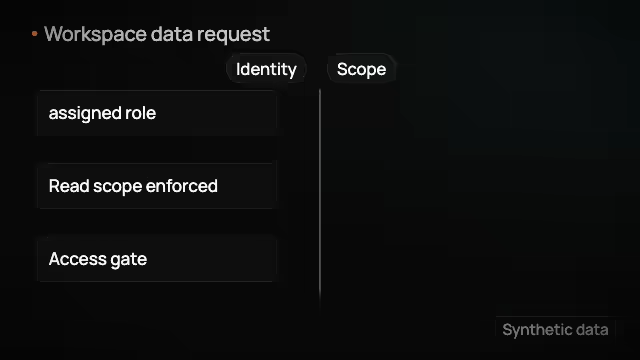
S14 · AI Gateway
Set access rules
Everyone uses AI, nobody controls who can call which model or tool, and incidents cannot be traced.
Define team access, review rule changes and test allowed and denied requests.
- Define access scope
- Validate and review changesHuman review
- Apply access rules
- Review request evidenceHuman review
4 steps2 human reviews6 components
S12 · AI Gateway
Compare and switch models
New models keep arriving: switching may make results worse, not switching may leave you behind.
Compare available services on shared samples, then review differences and adjust primary and fallback choices.
- Check candidate services
- Compare sample results
- Review switch proposalsHuman review
- Configure primary and fallback
- Recheck samplesHuman review
5 steps2 human reviews7 components